Ever looked at a Mimico waterfront condo listing and wondered why the monthly fees vary so much between buildings that look similar from the outside? You are not alone. Fees in Humber Bay Shores and Mimico–Queensway reflect the building’s systems, amenities, and long-term planning, not just the view. In this guide, you will learn what condo fees usually cover in local waterfront towers, how to compare fees across buildings the right way, and what documents to review before you buy. Let’s dive in.
What condo fees cover in Mimico waterfront towers
Mimico and Humber Bay Shores are home to high-rise towers with extensive common elements. Fees are set by each condominium corporation and must follow Ontario’s Condominium Act. For a quick legal primer and owner rights, review the Condominium Act, 1998 on the Ontario e-Laws site and consumer guidance from the Condominium Authority of Ontario.
Operating and building services
Your fee supports the day-to-day operations of the building. Common items include wages for concierge and security, on-site superintendent, cleaning teams, and seasonal landscaping. In tall waterfront towers, you should also expect elevator service contracts, regular exterior glass cleaning, and more frequent winter clearing because of wind near the lake.
Utilities and billing basics
Fees usually include water and sewer for the building. Heating is often central in Toronto high-rises, so heat is typically included as well. Electricity varies by building. Some towers include only common-area electricity and bill in-suite hydro to owners via individual meters, while others use bulk-metering where hydro is part of your fee. Ask how gas is handled if the building uses boilers or offers in-suite gas.
Amenities and upkeep
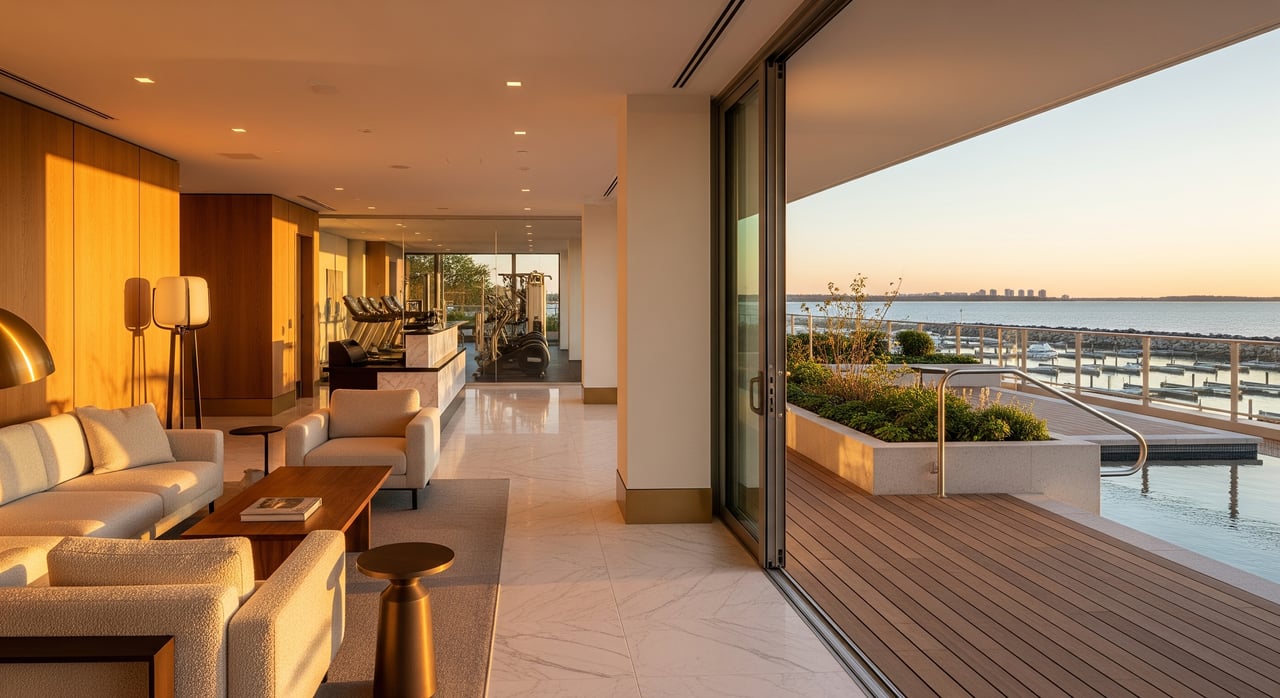
Waterfront buildings often feature large amenity sets. Your fee covers cleaning, staffing, supplies, and utilities for fitness rooms, party rooms, guest suites, pools, saunas, rooftop terraces, and lounges. Landscaping of any private walkways or shared promenade areas tied to the development is also funded through common expenses.
Insurance and administration
The corporation carries blanket insurance for the structure and common elements. Your fee pays these premiums and the property management contract, plus legal and accounting costs. You still need your own condo unit policy for contents and applicable deductibles. Municipal property taxes are paid by individual owners, not through condo fees in Ontario.
Reserve fund contributions
A core part of your monthly fee goes to the reserve fund for long-term repairs and replacements. This is required in Ontario and guided by a professional reserve fund study that is updated on a set schedule. In waterfront towers, big-ticket items include elevator modernization, façade work, balcony waterproofing, HVAC replacements, and pool systems. You can learn more about reserve funds and owner documents through the Condominium Authority of Ontario and the Canadian Condominium Institute.
Security and waste management
Most waterfront towers operate 24/7 concierge or security, access control systems, and CCTV monitoring. Waste and recycling removal, chute maintenance, and bulk disposal services are common operating costs wrapped into fees.
Optional bulk services
Some corporations negotiate bulk cable or internet packages. In those buildings, your monthly fee may include these services. Others leave TV and internet to owners. Bulk utility arrangements are more common in older buildings.
What fees rarely include
- Parking and locker: sometimes included, sometimes billed separately. Confirm both.
- In-suite electricity if individually metered, plus your personal internet or phone plan.
- Your condo unit insurance policy for contents and deductibles.
- Special assessments: one-time levies for major repairs or shortfalls if the reserve fund is not sufficient.
For a plain-language overview of typical inclusions and budgets, you can also consult resources from major management firms like FirstService Residential.
Why fees differ between buildings in Mimico
Two towers on the same block can carry very different fee structures. Here are the main drivers in the Mimico–Queensway and Humber Bay Shores area.
Age and maintenance profile
Older towers often face larger near-term capital work such as façade remediation or balcony repairs. That can mean higher reserve contributions or temporary fee increases. Newer towers may have lower initial maintenance needs but can see fees rise as systems age.
Amenity load and service level
Pools, saunas, large gyms, guest suites, and 24/7 concierge all increase operating and staffing costs. Higher service levels usually mean higher fees. Decide which amenities you will actually use.
Building size and unit mix
Smaller corporations have fewer owners to share fixed costs. A boutique building can feel exclusive, but the per-unit fee can be higher than in larger towers that spread costs across hundreds of units.
Energy efficiency and metering
Buildings with modern mechanical systems and individual hydro or gas meters can control common expenses better, but more costs may shift to owners directly. In bulk-metered buildings, your fee reflects a larger utility bundle.
Management and contracts
Competitive service contracts for cleaning, snow removal, and HVAC can help keep fees stable. Strong property management practices matter. You can learn about budgeting and governance best practices through the Canadian Condominium Institute.
Reserve fund health
If a corporation recently completed major projects, fees may rise while the reserve fund is rebuilt. If the reserve is underfunded and big projects are coming, special assessments or jumps in fees are risks to watch.
Waterfront exposure
Lakeside wind and moisture accelerate exterior wear on glass, balconies, and metal components. That added exposure can increase maintenance costs compared with similar midtown buildings.
How to compare fees the right way
Comparing two listings by the dollar amount alone will mislead you. Use this simple framework.
1) Normalize by size
Calculate the fee per square foot: monthly fee divided by interior area. This lets you compare a 500 sq ft studio to a 1,100 sq ft two-bedroom on equal footing.
2) Adjust for inclusions
Make a side-by-side list of what each building includes: water, heat, hydro, cable/internet, parking, and locker. If one building includes hydro and the other does not, add a realistic estimate of hydro to the second building before comparing.
3) Account for parking and locker
Ask whether parking and locker are included in the fee or billed separately. A separate parking maintenance fee or rental charge can change your monthly budget.
4) Check reserve fund strength
Request the latest reserve fund study and the current reserve balance. Align upcoming projects with the funding plan. Buildings with near-term major work and low balances may face fee increases or levies. The Condominium Authority of Ontario outlines what must be disclosed in owner documents.
5) Review budgets and history
Ask for the last 3–5 years of budgets and actuals. Steady, modest increases are normal. Sudden jumps or repeated special assessments warrant more questions.
6) Read minutes and confirm litigation status
Recent meeting minutes can reveal pending projects, discussions of assessments, or building-wide issues. Confirm if there is any ongoing litigation that could affect finances.
7) Align service level to your lifestyle
If you value 24/7 concierge, guest suites, and a large gym, higher fees may be worth it. If you rarely use amenities, a simpler building could offer better value even with fewer perks.
8) Consider in-suite control
If hydro is billed directly, you can manage your own consumption. If the building is bulk-billed, the convenience is higher but you have less control.
For broader financing and ownership considerations, visit the Canada Mortgage and Housing Corporation.
Documents to request and red flags
In Ontario, the status certificate is your key roadmap. It discloses current fees, budgets, reserve balances, insurance, rules, and key minutes. Learn about status certificates and owner rights through the Condominium Authority of Ontario.
Your document checklist
- Status certificate with current budget, reserve fund balance, insurance summary, arrears, rules, and minutes.
- Most recent annual budget and the last 3 years of budgets.
- Reserve fund study and current reserve balance, with the next study date.
- 2–3 years of audited or reviewed financial statements.
- Recent AGM and board meeting minutes, plus any special meeting minutes.
- Insurance certificate and deductible schedule.
- List of monthly inclusions: water, heat, hydro, cable/internet, concierge, parking, and locker status.
- Management contract details and major vendor contracts if available.
- Any approved or proposed special assessments.
Red flags to watch
- Low reserve fund with major projects due soon.
- Multiple recent special assessments or sudden large fee increases.
- High owner arrears on common expenses.
- Ongoing litigation related to construction defects or safety issues.
- Bulk utilities without clear cost controls or recent utility spikes.
- Amenities that require heavy staffing without offsetting revenue.
Key questions to ask before you buy
- Is water included? Is hydro bulk-billed or individually metered to the unit?
- Are parking and locker included in the monthly fee or paid separately?
- When was the last reserve fund study completed, and when is the next due?
- What major capital projects are planned in the next 3–5 years?
- Has the corporation levied any special assessments in the past 5 years?
- What percentage of owners are in arrears on common expenses?
- Who manages the building, and when does the current contract expire?
Local tips for Humber Bay Shores buyers
- Expect variety. Newer luxury towers may have modern systems and in-suite metering that shift some costs to owners. Older buildings may include more utilities in fees and have larger capital projects on the horizon.
- Verify exterior work. Waterfront exposure can accelerate façade and balcony wear. Ask about recent remediation, warranties, and next scheduled work.
- Clarify maintenance boundaries. Some developments maintain portions of waterfront promenades or shared landscapes. Confirm how those agreements are funded.
- Compare like for like. When you normalize by size and inclusions, the “cheapest” fee is not always the best value if the reserve fund is weak or major work is looming.
A quick copy-and-paste worksheet
Use the notes below as you compare two or three Mimico buildings.
- Address and corporation number:
- Unit size and plan:
- Monthly fee:
- Fee per sq ft:
- Includes: water / heat / hydro / cable / internet / parking / locker
- Hydro billing: individual meter or bulk
- Reserve fund balance and study date:
- Planned projects in next 3 years:
- Fee history last 3 years:
- Minutes reviewed and litigation noted:
- Amenities you will use:
- Red flags or follow-ups:
Next steps
When you find a condo you love, your next move is to request and review the status certificate and budget before you firm up. Align the fee level with what is included, the health of the reserve fund, and the building’s upcoming projects. If you want a second set of eyes and local context from someone who studies Mimico and Humber Bay Shores daily, reach out to our team. We will help you compare buildings, interpret documents, and match service levels to your lifestyle.
If you are planning a purchase or want to position your current condo for sale with a clear plan, connect with us at OwnIt.ca. We are here to help you move with confidence.
FAQs
What do condo fees typically include in Toronto waterfront condos?
- Fees usually cover building staffing, cleaning, common utilities, amenities upkeep, building insurance, property management, waste removal, and reserve fund contributions.
Are hydro and water included in Mimico condo fees?
- Water and heat are often included, while hydro may be bulk-billed or individually metered depending on the building. Always confirm the billing method before you compare fees.
What is a status certificate in Ontario and why does it matter?
- The status certificate discloses current fees, budgets, reserve balances, rules, insurance, arrears, and key minutes, helping you evaluate financial health before you buy.
How do amenities affect fees in Humber Bay Shores buildings?
- Pools, saunas, large gyms, guest suites, and 24/7 concierge increase staffing and utility costs, which raise monthly fees. Pay for the amenities you will actually use.
What is a reserve fund and how does it impact my fees?
- The reserve fund pays for long-term repairs like elevators, façade work, and HVAC. Strong funding can stabilize fees, while weak funding can lead to increases or special assessments.
How can I compare condo fees across buildings quickly?
- Normalize by fee per square foot, adjust for what is included, factor in parking and locker, and review the reserve study, budgets, and minutes to spot risks or pending projects.